
I traded in my CR-V for an EV, whaaaaaaaaaat
I'm not a car person. I'm not an early adopter. I bought a Honda CR-V because it was practical and reliable and that was basically the end of my thought process.
So when I tell you I traded it in for an electric car, I want you to know I was skeptical too.
Here's why I did it.
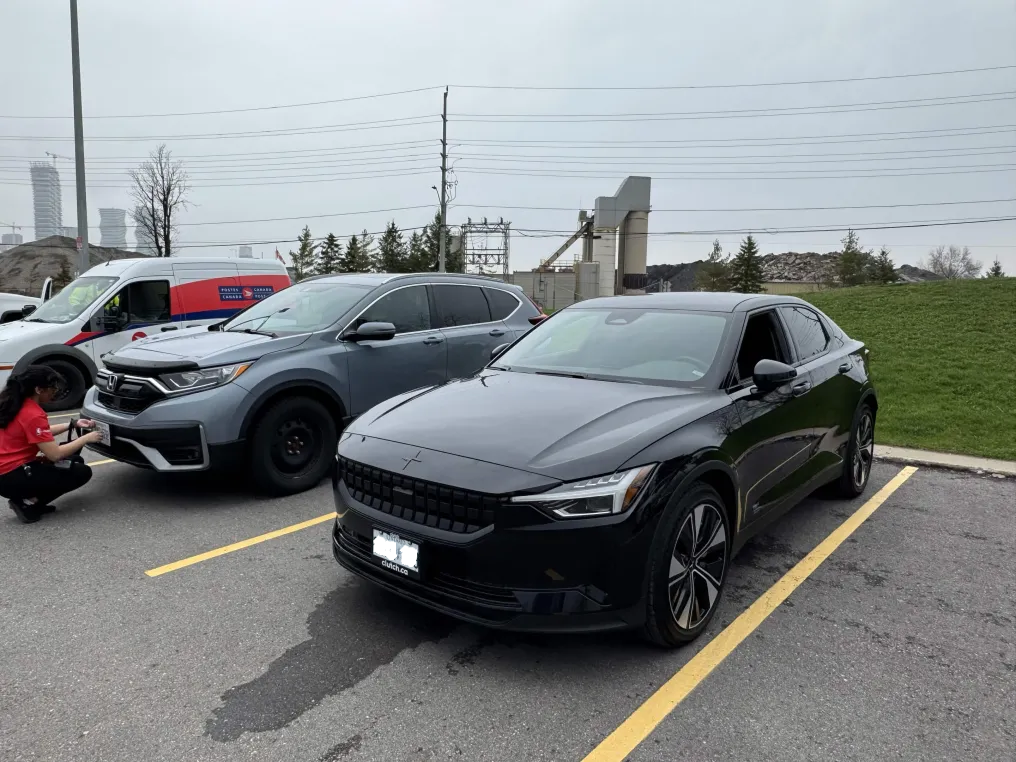
What I bought and why
It's a 2023 Polestar 2 long range single motor. Polestar is Volvo's higher end EV brand — Swedish, kinda bougie, very understated. It does not look like an EV. It looks like a normal sedan that an old man would own. I love this about it.
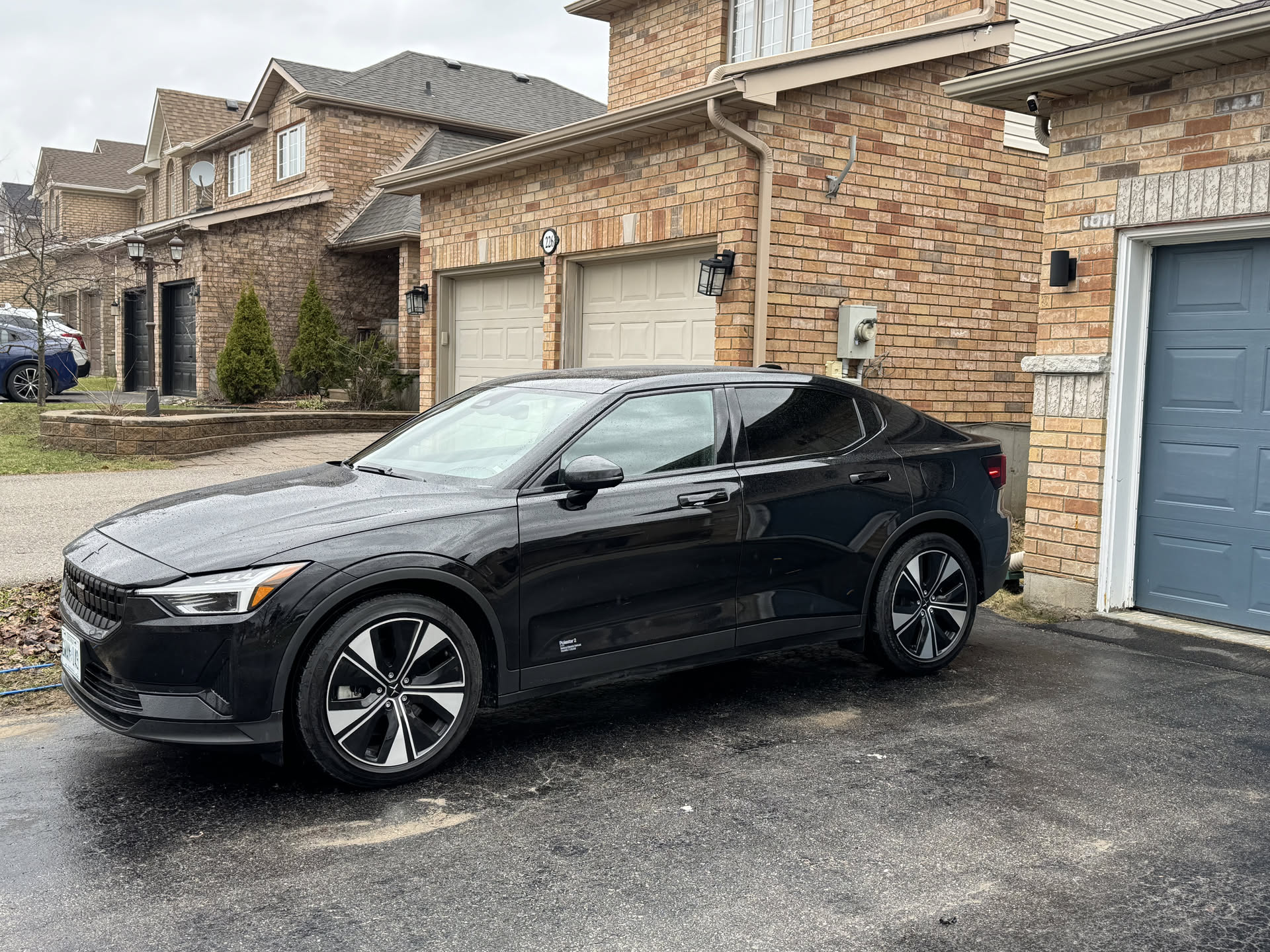
These were $60,000 new, three years ago. I picked one up used with ~30,000 km on it for ~$30,000. It still has factory warranty remaining, and the battery is covered for 8 years / 160,000 km.
This is now our second family car. My wife kept the green CR-V for road trips. The Polestar is my daily — daycare runs, school pickups, commuting a couple days a week.
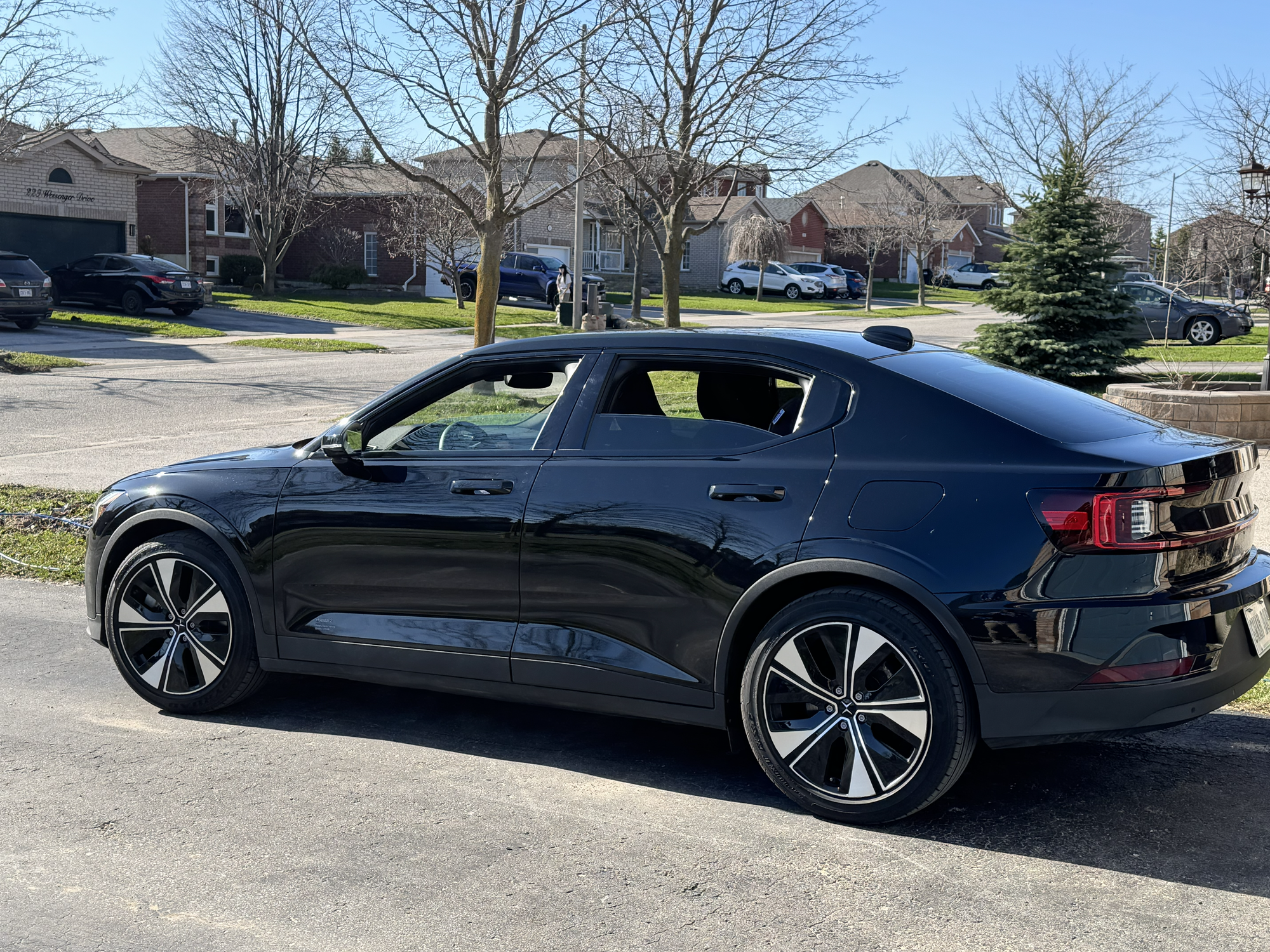
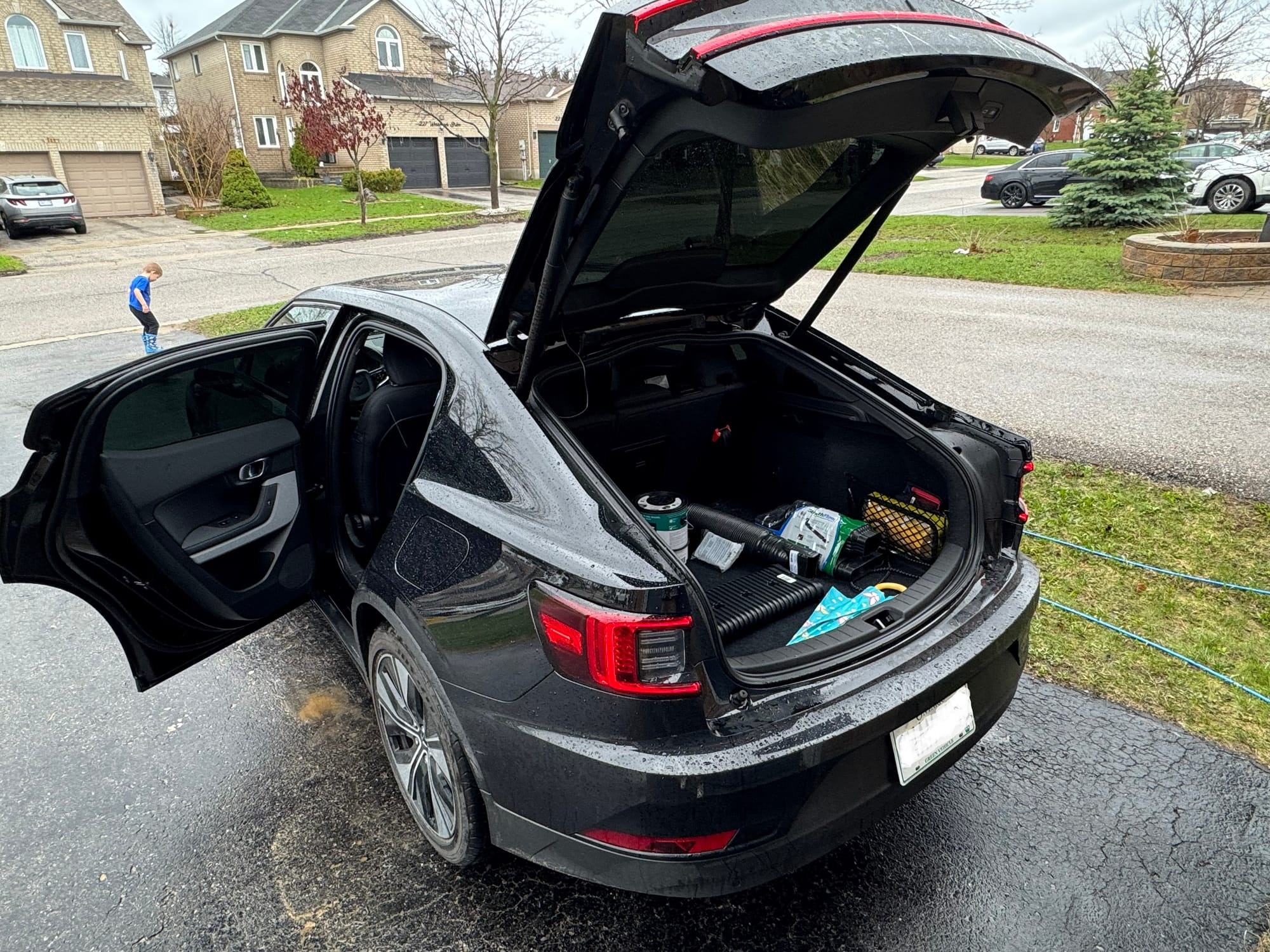
why
- I wanted a new car anyway. I wanted to go vroom. And I wanted a sedan form factor. Remember, we already have a 2026 CR-V.
But the real bonus ... It SAVES me money every month. Here's the breakdown:
Insurance
Honda CR-Vs and Toyotas are among the most stolen vehicles in Canada right now. EVs — especially less common ones like the Polestar — are significantly harder to steal, less targeted, and there are fewer of them on the road. My insurance went down switching from the CR-V to a "luxury" car.
- Before (CR-V): baseline
- After (Polestar 2): saving over $1,200/year
Fuel
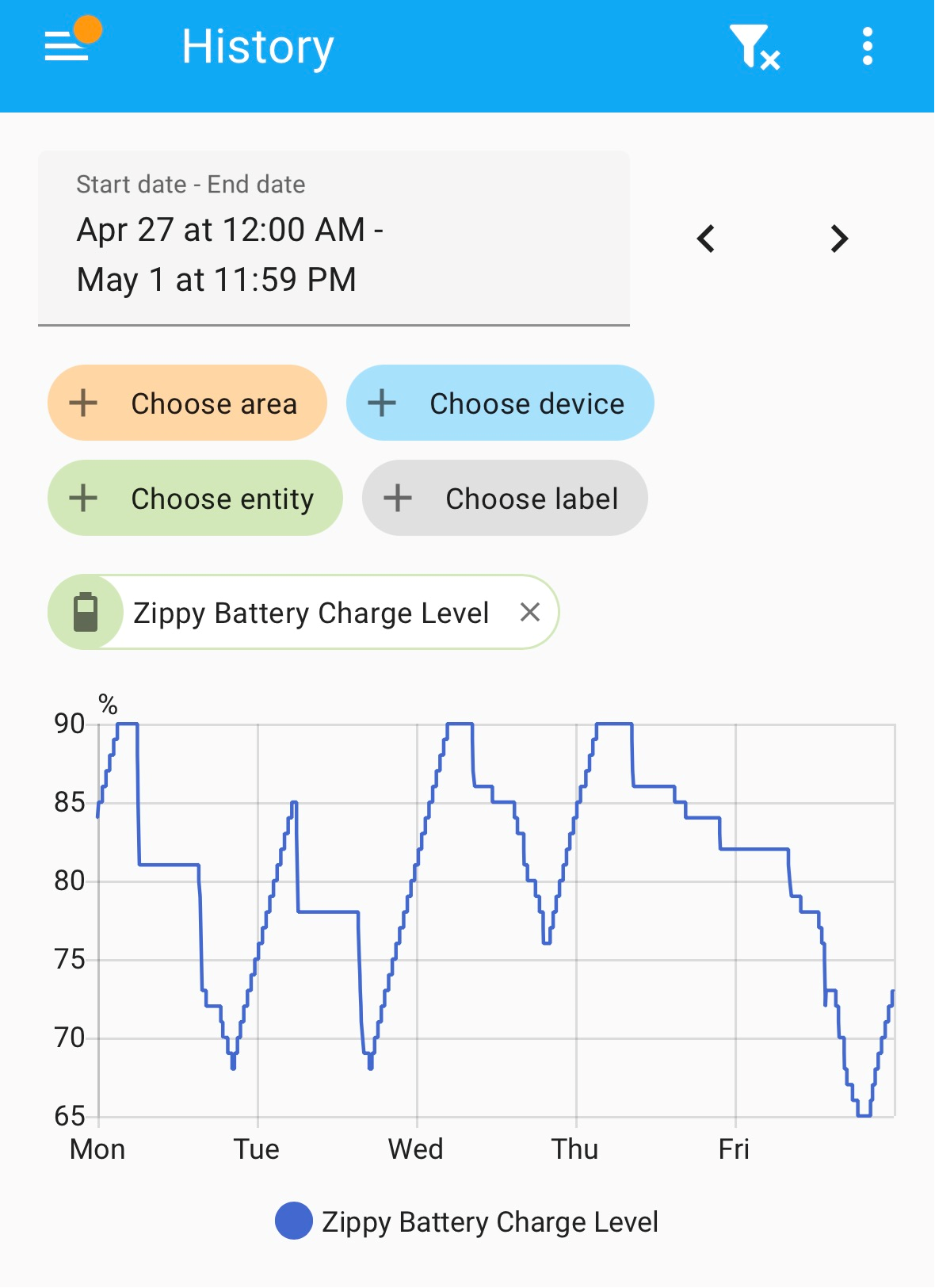
I don't have a Level 2 charger installed. Just a regular wall outlet in the garage. I drive maybe 15-20% of the battery on an average day. I plug in overnight. By morning it's topped up. The range I used is reclaimed - even if it doesn't get to 100% or even 90%. It's a mental shift; you need to rethink how you fill up your car with fuel. It's like having a car that slowly refuels itself while it's sitting in your garage doing nothing anyway. for pennies on the dollar.
Here is an example of a typical week. note that the bottom of the graph is not zero, but 65%. which would get 230km of range still.
Cost comparison for a 280 km trip:
| CR-V (gas) | Polestar 2 (electric) | |
|---|---|---|
| Energy used | ~22.7L of gas | ~equivalent kWh |
| Cost at current prices | ~$41 | ~$3 |
Those 10x savings stack up every single time you drive.
Maintenance
EVs have far less moving parts than gas cars. No oil changes, no transmission fluid, fewer things to break. The main things to watch: tires wear faster (the car is heavy and the torque is instant), and brakes can rust from not being used enough — regenerative braking handles most of the slowing down, feeding energy back into the battery. Recommended fix: actually use your brakes hard every once in a while. The "maintenance" on an electric vehicle that the dealership does is hilarious. They:
Check cabin filter
Fill washer fluid
.... that's literally it.
"But will the battery die and I'll be on the hook?"
This was my biggest concern going in. Here's what the data actually says.
A company called Generational analyzed over 8,000 real-world EV battery tests across 36 automakers. The results:
- Average battery health across all vehicles tested: 95.15%
- 4–5 year old EVs: median 93.5% health
- 8–9 year old EVs: median 85% health
- High-mileage EVs (160,000+ km): frequently 88–95% health
Most manufacturer warranties cover batteries down to 70% capacity over 8 years. Real-world vehicles are rarely getting anywhere near that threshold.
Mileage alone isn't the predictor we thought it was. How a battery is charged and driven matters more than the odometer. A well-maintained high-mileage EV can have a healthier battery than a low-mileage one that was charged carelessly. That's a very different mental model from gas cars.
My battery is covered under warranty for 8 years / 160,000 km. I intend to drive this thing into the ground. I'll check my battery state of health with an OBD adapter in a future post and show you all the results. As far as I can tell by the car's predicted range, my battery health after 3 years and 31,500km is still 98+%.
What it's actually like to drive
The power is instant. No rev, no delay, no buildup — you press the pedal and it just goes. It's quiet enough that all you hear is wind and tire noise, which makes the speed feel slightly surreal.
On the highway I accelerated from 100 to 150 km/h in a scary low timeframe. And this is the single motor version. do whatever you want .. pass on a hill. make moves you could not before. In the city, it is incredibly fun. Stop and go traffic is where it's most efficient and easy.
It has normal door handles. Window buttons. A volume knob. A regular gear shift. NORMAL Lock, Unlock, Trunk and alarm buttons on the key fob. Physical controls everywhere. I looked at Tesla interiors and they're not for me. This is like a regular car that happens to be very fast and very fun.
A conventional engine converts only about 20-40% of the fuel it burns into actual movement, the rest is wasted as heat. Every time you brake, that kinetic energy you built up just... disappears as heat through the brake pads. Goes nowhere. Does nothing. An EV flips that on its head with regenerative braking. When you slow down or go downhill, the motor runs in reverse and feeds that energy back into the battery. You're recovering momentum and storing it for later. The car is refilling itself, a very tiny amount, every time you lift off the gas. But during a long downhill seeing your battery percentage GO UP is crazy.
It's one of those things that once you understand it, the idea of just cooking off all that energy at your brake pads forever feels kind of silly.
A few things:
- Mirrors automatically tilt down when reversing
- Hold the lock button on the key → all windows close
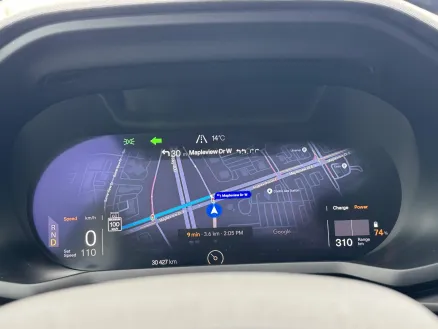
- Google Maps is displayed right behind the steering wheel, where your eyes already are
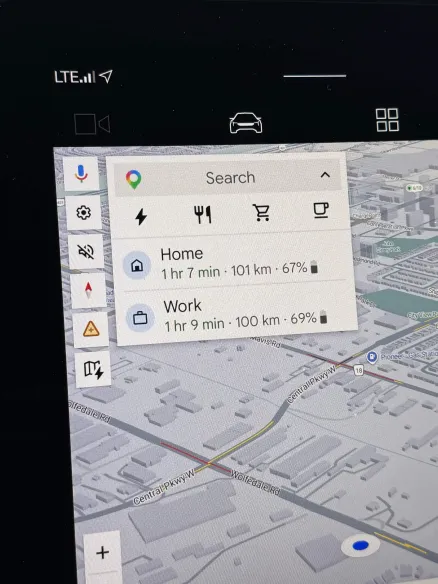
- It tells you exactly how much battery you'll have when you arrive at any destination — and if it's too far, it automatically adds a charging stop
Range: the real numbers
The car claims 350–400 km on a full charge. Winter cuts that by about 30%. Here's how that plays out in practice:
- My daily commute: uses ~20% of the battery
- Drive to the cottage (137 km each way): 40% there, 40% back — still have range left over.
- Worst case, there's a fast charger 1.5 km from my house. 20–80% in about 40 minutes. That's 300+ km of range, in under an hour.
- "Slow charging" is CHEAP. How often are most people roadtripping? Do you have a regular job? Drive less than 100km a day? You would be perfectly fine on "slow" charging!
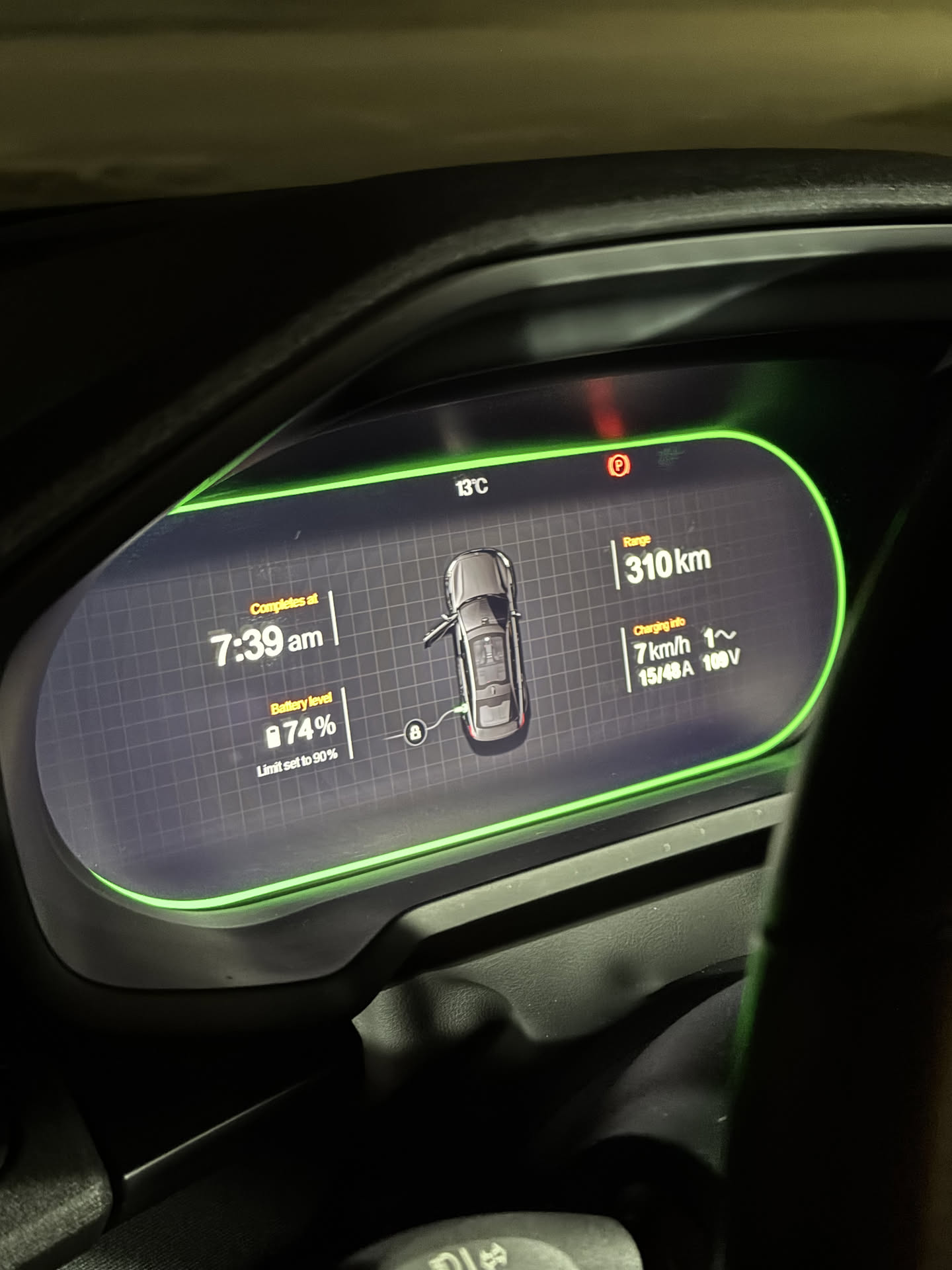
- Below, I am limiting the charge to 90%. This is recommended for the long term health of the battery. Just a reminder than 300km is A LOT.
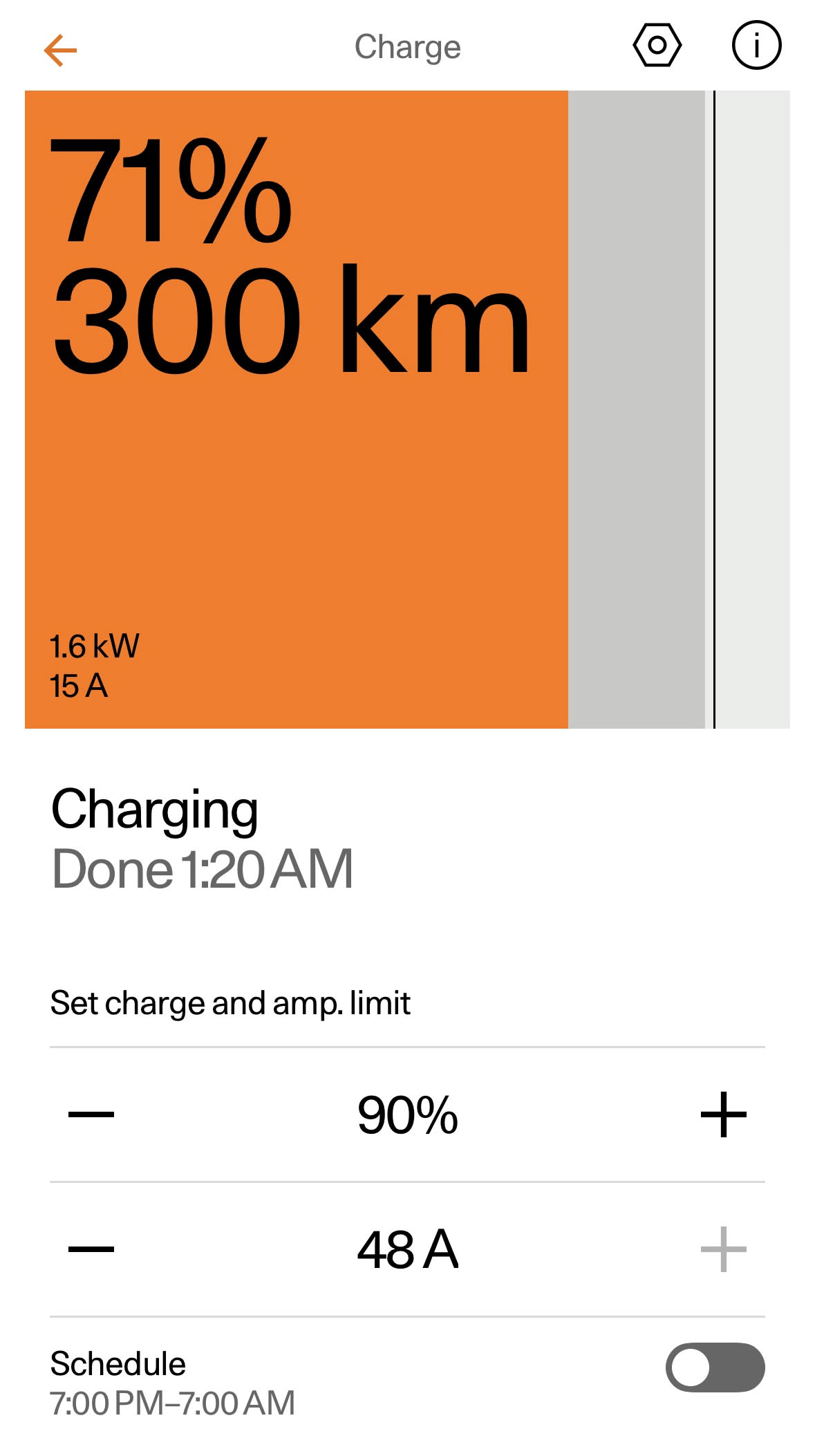
I've needed that fast charger zero times. I just plug in when I get home, or don't even bother some nights. I plug in when I'm done using my car for the day.
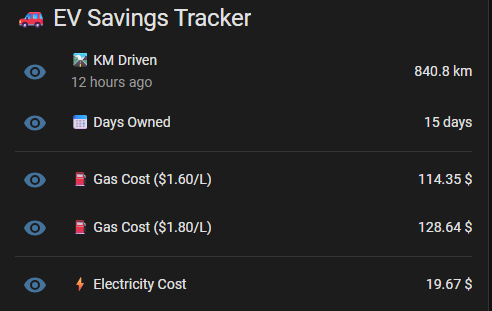
I've driven ~840km in 14 days, about 57 km a day?
I have not purchased $115 - $130 worth of gas. I have spent $20 on electricity.
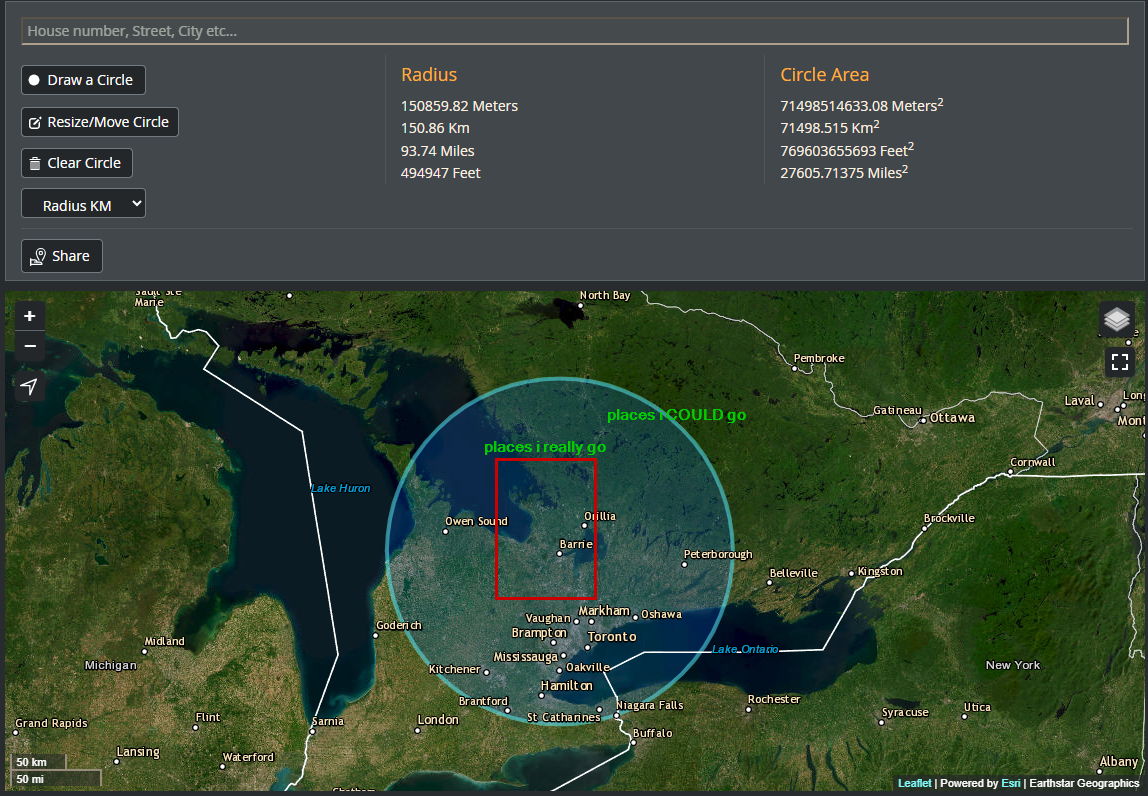
Here's a conservative 150km radius around my city. In reality, almost all the driving I do is within the red square. I COULD go much farther! 300-400KM is a LOT of range for most people!
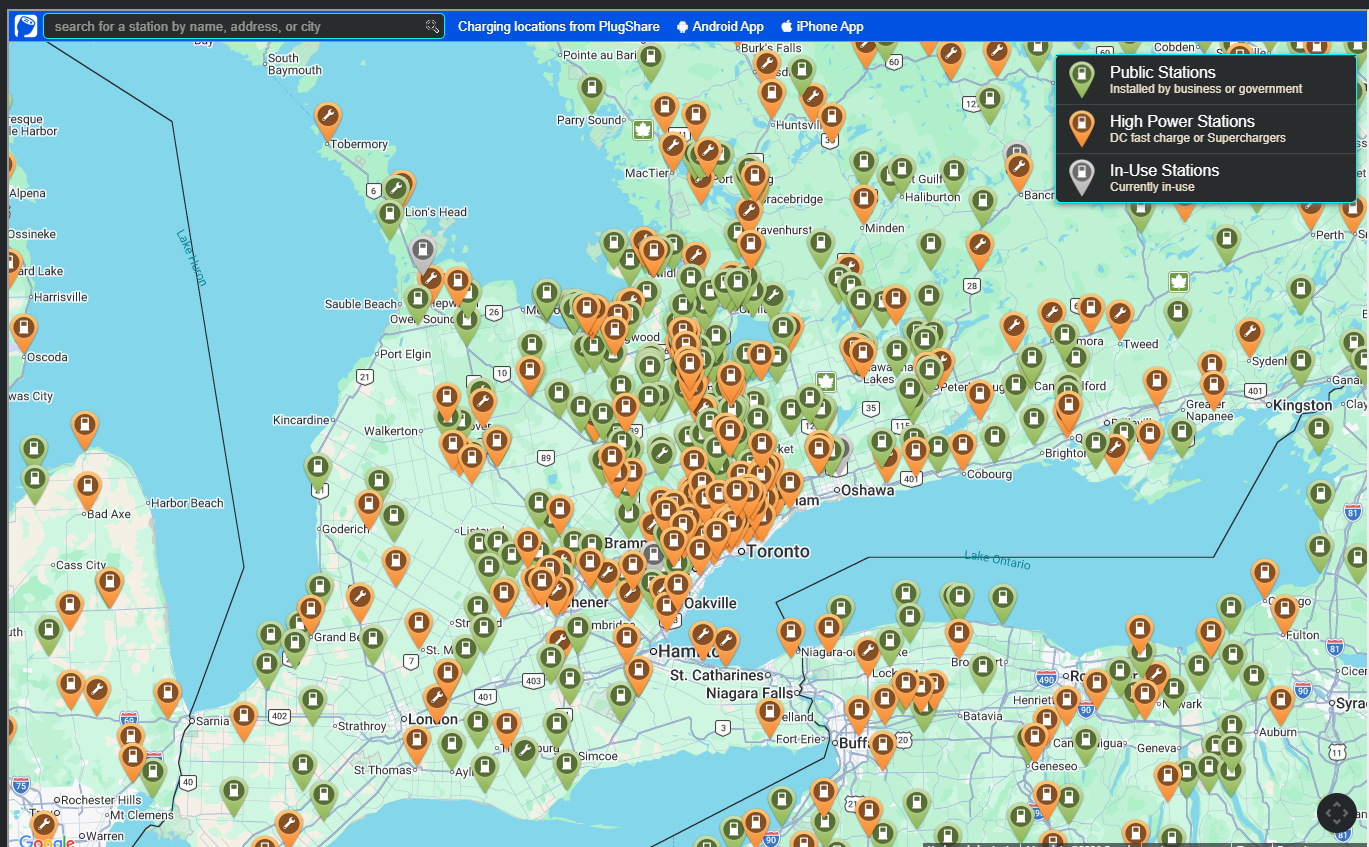
And there's chargers everywhere now, and they're getting better and better, and they're generally cheap. As well, as of 2025, the Tesla Supercharger network has been opened up to non-Tesla vehicles with a $100 CCS > NACS adapter.
Winter
Okay fine. You want me to talk about winter? I'll keep talking about winter.
yes. Winter. I know. yes.
Imagine this. You wake up in the morning and go out to your plugged in car. Or, if you are very privileged, you just go into your garage. There are no fumes. It’s warm for you, using wall power. You already set your departure time on an app that always works, the car is always connected. It’s fully defrosted. The battery is warm. There’s no forgetting to pre-start… no waiting for a while after you get going from a cold start. It’s just instant, silent power. You unplug it and you go.
that’s what winter is like in an EV. I don’t worry about range. I worry what the cafeteria is gonna have for lunch that day.
The used EV market right now
the used EV market is loaded right now. A lot of people leased or bought EVs, range anxiety or worry about long term battery health got to them, and the supply of recent, used EVs with remaining warranty is significant. Prices have dropped substantially. If you've been curious, this is probably the most accessible it's ever been. You can let someone else take the massive depreciation hit and get a $50, 60, 70k vehicle for half off. The best used car site i've found recently is https://visor.vin/ (or https://ca.visor.vin/ for Canada.)
I didn't think an EV would make sense for my life. I thought it was for people with longer commutes who'd justify the premium, or people who cared more about it than I did (to install a fast charger.)
Turns out it makes sense for almost anyone who drives a predictable daily distance and sleeps at home at night. Which is most people. Caveat*: Those without a garage, driveway, or accessible outdoor outlets. I totally understand your predicament, condo owners. Lobby your condo board to install chargers.
Do you have a job?? Do you mostly drive to work and back, to school and back, to childs recreational activities and back? You would be crazy to not consider an EV at this point.
YOU JUST PLUG IT INTO THE WALL !! !! !!
Are you a person who doesn't have a job and road trips all the time, cross the country and back, working out of your van? EVs are not for you, YET. But in 5-8 years... they'll be charging from 0 - 100 in less than 10 minutes. And check out the ones like that Nissan with the solar panels on the roof!
Cheaper to insure. Fraction of the fuel cost. Silent. Way more fun to drive than I expected. And the battery will probably outlast the car.
I'm not a car person. I'm not an EVBro. But I get it now.
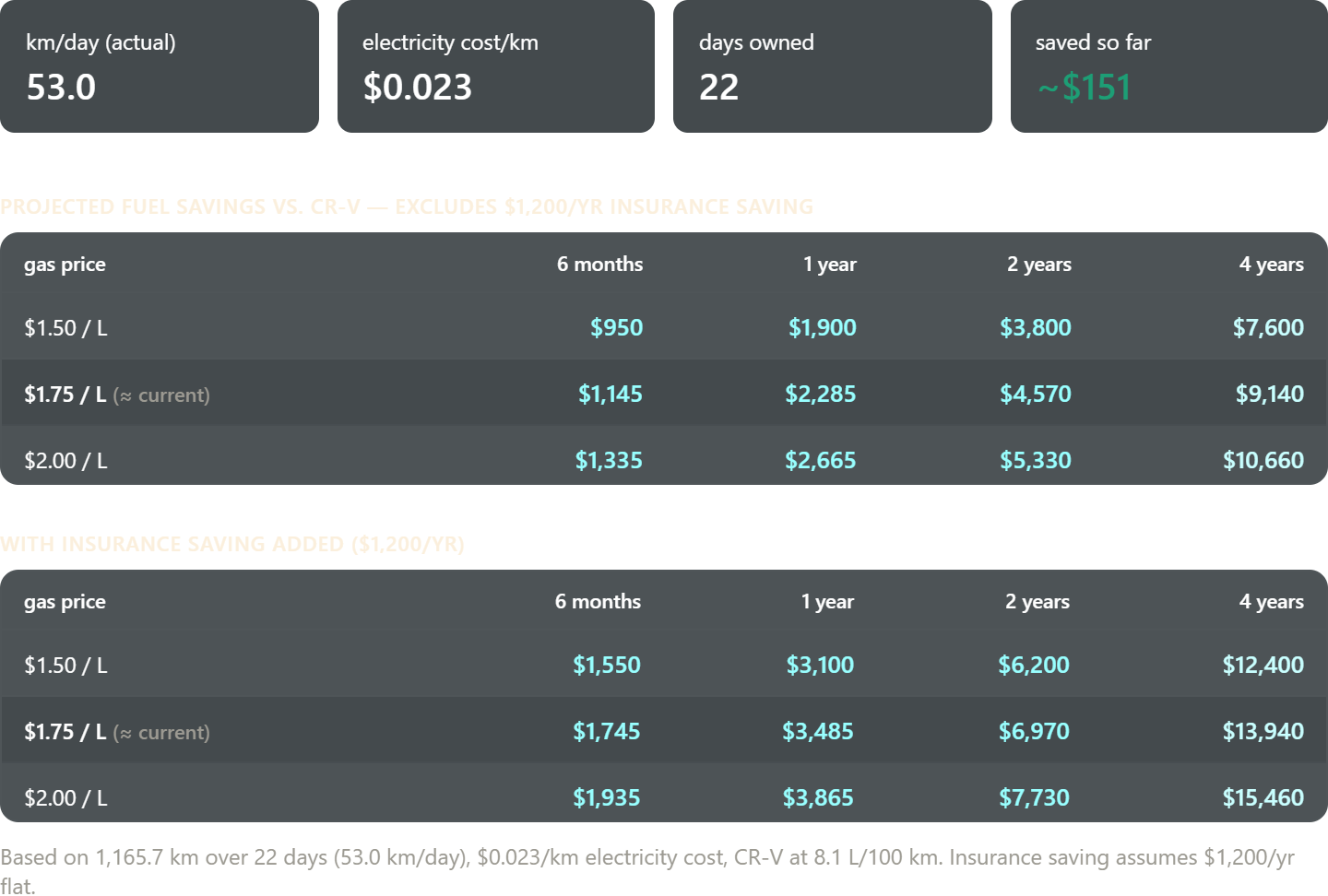
Appendix: here's some data. I have now driven 1165km in 22 days.
Lets use my actual electricity cost rate and km/day to project forward, with gas at three price points. At time of writing, it is at $1.80/L. I've save $150 bucks and I haven't even had it a month yet.
okay byeeeeeeeeeeeeeeeeeeeeeeeeeeee thanks for reading
Lisette says: "yeet."
Chandler (my boss) says: "Go do your job"
Gord says: "maybe this will make me care about cars again"
Elenna (my wife) says: "you are insufferable 💖"